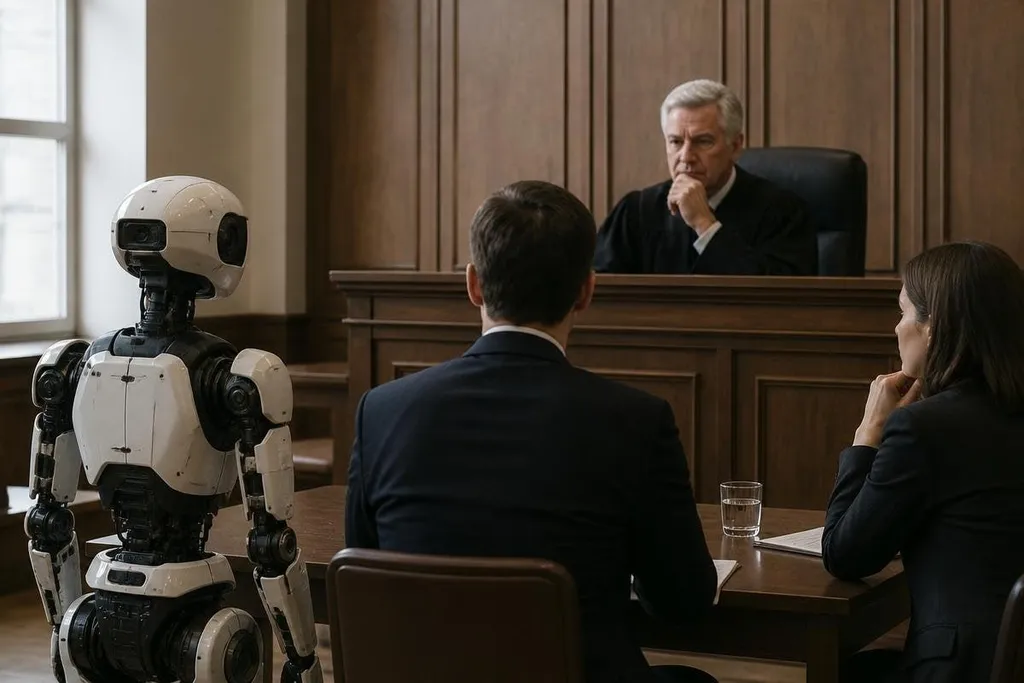
A legal person doesn’t need a human body. A company can own property, sign contracts, pay taxes, and face a lawsuit. The harder question is what a robot would gain from the same status, and who would pay when it causes harm.
- A robot could hold rights and duties created by law.
- Legal status would not prove that a robot thinks or feels.
- Liability, insurance, and control would decide the practical value.
What “legal person” means
Legal personhood is a legal tool. It lets the law treat an entity as a holder of rights and duties, even when that entity is not a human being.
That status can be narrow. A company may own a building, but it cannot vote in a national election. A trust can hold money for someone else, but it has no body that can drive a vehicle. The law sets the limits for each kind of person.
A robot could receive a similarly narrow status. A statute might let one own a bank account, sign a service contract, or hold funds for repairs. It would not need to receive freedom of speech, citizenship, or a right to vote.
This distinction matters for automation firms. A robot that carries goods in a warehouse may need a clear owner, operator, and insurer. Giving it a legal name would not answer those questions by itself.
The case for giving robots a legal status
Advanced robots may act with less direct control than ordinary tools. An autonomous system can read sensor data, choose a route, slow down near a person, and change its task after new instructions. A remote operator may set the goal without choosing each movement.
That gap can make a normal liability model harder to apply. If a robot injures a worker, a court may need to examine the maker’s software, the owner’s safety checks, the operator’s instructions, and the site’s layout. Personhood could create a separate legal account for the robot, funded through insurance or a fixed payment from its owner.
The idea has a practical limit. A robot cannot earn money in the human sense unless people give it property, a contract, or a revenue stream. Its legal account would still begin with money supplied by a company, owner, or public body.
That legal question depends on what the robot can actually do, who controls it, and who pays when it causes harm. Reports at Robot24.com can place a robot’s task, owner, and failure record beside claims about rights or duties. The next section looks at the problems that legal personhood could create.
Why personhood may create more problems
Legal status could spread blame without fixing the cause of an accident.
An owner might place assets in a robot-owned account and argue that the robot, rather than the company, should pay. The injured person would still need to show what happened and find enough money to cover the loss.
Software also changes after deployment. A robot may receive a new model, a revised safety limit, or a new task rule. A law would need to say which version counts when something goes wrong, and who must keep the records.
Control creates another test. A person can usually explain a decision in court. A robot may produce logs, sensor readings, and model outputs instead. Those records can show what the system did, but they may not explain why it selected one action over another.
I’d reject full legal personhood for robots until lawmakers can answer who funds the robot, who controls it, and who pays after harm.
A workable legal test
A narrower system could give robots duties without treating them like citizens. The law could attach responsibility to the people and firms that build, sell, operate, and maintain them, while requiring records for each major action.
Use this checklist when assessing a proposed robot law:
- Name the task: state which actions the robot may perform.
- Set the owner: identify the person or company that supplies its funds.
- Keep the logs: store software versions, operator commands, and sensor records.
- Fund the risk: require insurance or another payment source before deployment.
- Keep human liability: hold the maker or operator responsible for unsafe design or use.
That approach gives courts facts to work with and gives injured people a real party to contact. It also leaves room for different rules for a delivery robot, a surgical system, and a factory arm.
The next legal step is likely to be narrower than personhood: clear rules for control, records, insurance, and fault. Until a robot can hold money without a human owner behind it, calling the robot a legal person changes the paperwork more than the responsibility.